11 hospital visits unprepared. 11 times arriving panicked, scattered, empty-handed. 11 times the nurse asked "do you have her records?" and the answer was "they're at home." 45 minutes lost to scrambled memory when fear had emptied everything except the prayer that your child would be okay. That was before the system. Now the bag is by the door. The records are in the folder. The Communication Sheet is laminated and ready. The Warning Sign Checklist is on the fridge. And the Crisis Action Plan is practised, not improvised. The next 2am is different. Not because the crisis is different. Because you are different. Prepared. Alongside your child's medical team.
"Love is not a system. You need both. Now you have both."
"I am a good mother. I have always been a good mother. Now I am a PREPARED mother. The bag is packed. The records are organised. The Communication Sheet is ready to hand to any nurse in any hospital at any hour. The Warning Sign Checklist helps me recognise what is coming before the fever spikes. The Crisis Action Plan gives me steps when fear wants to take them away. I am not replacing my child's medical team. I am arriving ready to work WITH them. Faster. Better informed. Organised. My child receives care sooner because I am prepared. That is what the system gives me. Not treatment. Preparation. Alongside our doctor."
Your System Is Ready
Click below to download the complete guide and both bonus resources instantly.
Download Your Crisis Preparation Guide NowHere's What You Got
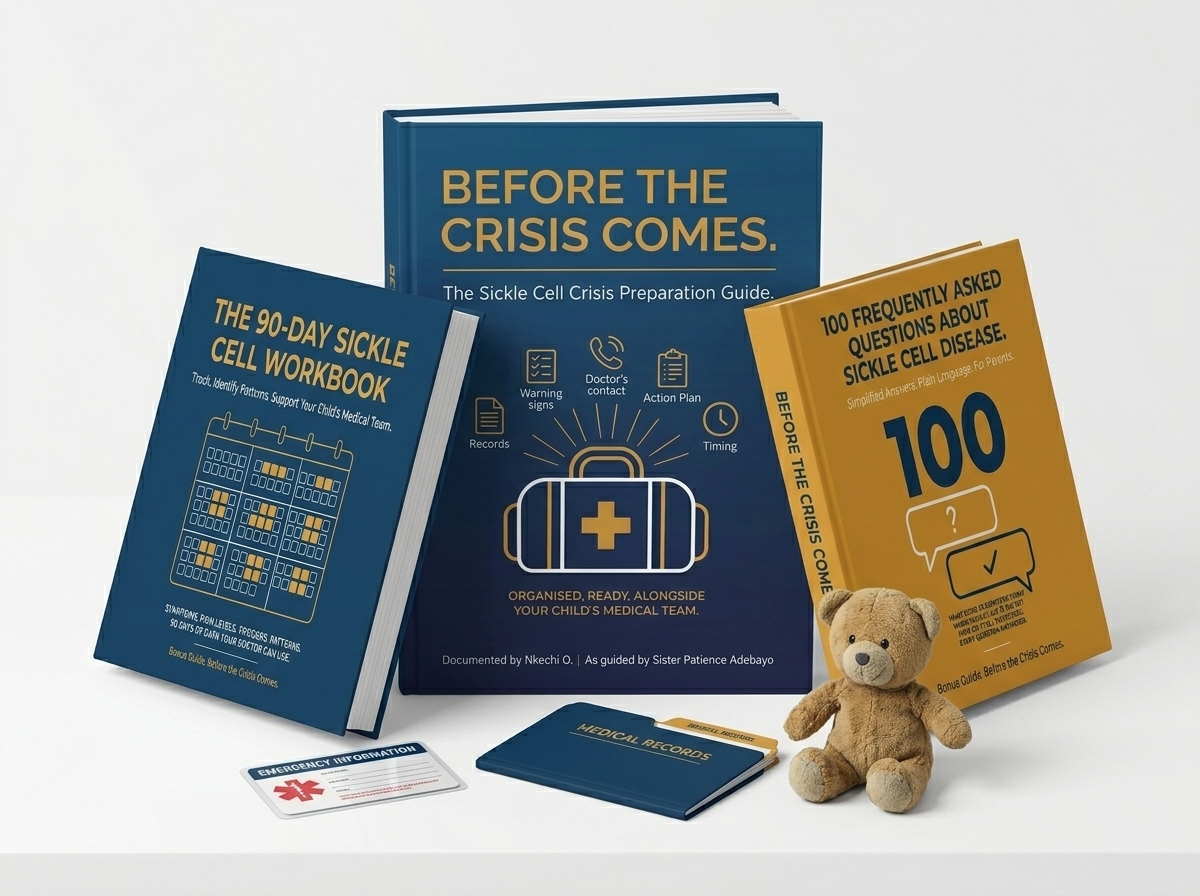
The Emergency Bag Checklist (what goes in, how to organise, where to keep it). The Medical Records Organiser (one portable folder, every document). The Warning Sign Checklist (early indicators, decision framework). The Hospital Communication Sheet (one page for the triage nurse). The Crisis Action Plan (step-by-step from warning sign to admission). All designed to be used alongside your child's haematologist and medical team
Daily tracking for 90 days: symptoms, pain levels, medications, triggers, patterns. Reveals your child's specific crisis patterns over time -- which seasons, which triggers, which early signs precede episodes. Data that helps your child's medical team provide more personalised care
The 100 questions sickle cell parents ask most, answered in plain, clear language. From "what does SS genotype mean?" to "when should I go to the emergency room?" to "how do I explain sickle cell to the school?" A reference you will return to for years
Your First 48 Hours
Download Everything Now
Tap the button above. Save all 3 files. The main guide is your immediate priority. The 90-Day Workbook starts tracking tomorrow. The 100 FAQs is your ongoing reference.
Pack the Emergency Bag Tonight
Open the guide. Turn to the Emergency Bag Checklist. Get a bag -- any durable bag you can keep by the front door permanently. Follow the checklist item by item. Medical records folder, medication list, blood type card, last CBC results, doctor's number, insurance papers, allergy list, a change of clothes for your child, a change of clothes for you. Pack it. Zip it. Put it by the front door. Done. The bag is ready. If the crisis comes tonight, you grab it and go.
Print and Laminate the Hospital Communication Sheet
The sheet is in the guide. Print it. Fill in your child's details: name, date of birth, genotype, current medications with dosages, allergies, last crisis date, doctor's name and direct number, blood type, insurance details. Laminate it (or put it in a plastic sleeve). Put one copy in the bag. Put one copy in your wallet. Give one copy to the school. The next time a nurse asks "do you have her records?" you hand her this sheet. 60 seconds. Everything she needs.
Put the Warning Sign Checklist on the Fridge
Print the Warning Sign Checklist. Put it on the fridge with a magnet. Every household member who cares for your child should see it daily. The checklist identifies the early indicators that a crisis is building -- the signs that appear hours BEFORE the fever spikes. Temperature thresholds. Pain patterns. Behavioural changes. Recognising these signs early gives you hours of lead time. Hours that change the outcome.
Read the Crisis Action Plan With Your Spouse or Co-Carer
Sit down together. Read the step-by-step Crisis Action Plan. From the moment a warning sign appears to the moment you hand the Communication Sheet to the triage nurse. Every decision point. Every action. Both of you need to know the plan. If the crisis comes and you are not home, your spouse grabs the bag and follows the same steps. The system works because it doesn't depend on one person's memory. It depends on a plan that both of you have practised.
Your Preparation Timeline
Do This Right Now
Open the guide. Turn to the Emergency Bag Checklist. Find a bag. Start packing it. Item by item. Check each one off. Medical records -- in. Medication list -- in. Blood type card -- in. Doctor's number -- in. Communication Sheet -- in. Change of clothes -- in. Zip it. Put it by the front door.
That bag by the door is the single most important thing you do tonight. Because if the crisis comes at 2am tomorrow, the difference between 45 minutes of panicked scrambling and 15 minutes to treatment is that bag. Pack it now. Everything else can wait until tomorrow. The bag cannot.
"Love is not a system. You need both. Tonight, pack the bag. Tomorrow, organise the folder. This week, practise the plan. The system is built. Your child is protected. Alongside your doctor."

Need Help?
Not sure about a warning sign? Need help organising the records folder? Question about the Communication Sheet? Parent to parent. Every message answered with care and understanding. Alongside your child's medical team.